The Muğla region is like a treasure chest waiting to be explored – not only for its deep-blue bays and sun-drenched beaches, but also for its thousands of years of history and unspoilt natural beauty. The way to feel this treasure most deeply and to touch its very soul is to walk its trails. And this is exactly what the Carian Trail was created for: as Turkey's longest waymarked hiking route, it invites you on an unforgettable adventure in the footsteps of the ancient Carian civilisation, accompanied by some of Muğla's most captivating scenery.
In this article, we'll take a detailed look at what the Carian Trail is, which areas it covers, the unique blend of history and nature it offers, its different sections and the practical side of walking it. If you, too, dream of grabbing your backpack and setting off on a journey into the heart of nature and history, heed the call of the Carian Trail and get ready to discover Muğla's historic hiking trails.
What Is the Carian Trail? The Birth and Philosophy of a Route of Discovery
The Carian Trail takes its name from the Carian civilisation that ruled this part of south-western Anatolia in antiquity, and at around 850 kilometres it is Turkey's longest waymarked long-distance hiking route. Opened to tourism in 2013, the project aims to be much more than just a hiking trail: it offers a holistic experience that brings together the region's rich historical heritage, its varied natural beauty and its living rural culture.
The route is waymarked with red-and-white stripes used to international standards (the Grande Randonnée system). These markings generally help hikers find their way without needing a guide. The philosophy of the Carian Trail is to encourage slow travel, a deep connection with nature and history, interaction with local culture and sustainable tourism. Walking this trail is not just a physical activity but also a personal journey of discovery and learning.
In the Footsteps of Ancient Caria: A Journey Through Time
The trail's name is no coincidence. The Carian Trail largely passes through the lands where the ancient Carian civilisation once held sway. The Carians were an Anatolian people present in this region from the 2nd millennium BC onwards; they had a language and culture of their own and were renowned as seafarers and warriors. Over time, they came into contact with Hellenistic and Roman cultures.
As you walk the Carian Trail, you will frequently come across traces left behind by this ancient civilisation:
- Ancient Cities: The route either passes right through or runs very close to many important Carian cities, such as Knidos, Hydas, Loryma (Bozukkale), Amos and Kaunos (via Dalyan), Labraunda, Alinda, Alabanda and Stratonikeia. Seeing the theatres, temples, city walls and agoras of these cities is like touching history itself.
- Ancient Roads: Some sections of the trail follow stone-paved roads built and used by the Carians thousands of years ago. Walking along them gives you a sense of direct connection with the past.
- Rock Tombs: The magnificent rock tombs, seen especially in and around Dalyan (Kaunos), reveal the burial traditions and craftsmanship of the Carian nobility.
- Towers, Cisterns and Farmhouses: Along the route you may also come across the remains of smaller ancient towers, cisterns that once met the need for water, or building foundations that may have belonged to farmhouses from antiquity.
Walking the Carian Trail is almost like strolling through an open-air museum: at every step you may encounter a different layer of history and experience the region's rich past first-hand.
In the Heart of Nature: The Trail's Varied and Captivating Landscapes
The Carian Trail showcases not only history but also the incredible natural diversity of the Muğla region. The scenery along the trail is constantly changing, and each view has a beauty all of its own:
- Coastal Paths: Especially on the Bozburun and Datça peninsulas, you walk along breathtaking coastal paths that run parallel to the deep-blue Aegean Sea, sometimes crossing steep cliffs and sometimes descending to small sandy beaches. Views of turquoise waters keep you company all the way.
- Pine Forests: Forests of Turkish red pine, the region's characteristic vegetation, cover a large part of the trail. Walking through the forest, breathing in the clean air, catching the scent of pine resin and making your way along shady paths beneath the trees is a truly refreshing experience.
- Olive Groves and Almond Orchards: Especially on the Datça Peninsula and further inland, you pass through vast olive groves with centuries-old trees, or almond orchards that become a feast for the eyes with their snow-white blossoms in spring.
- Maquis Shrubland: Typical Mediterranean maquis vegetation – strawberry trees, myrtle, bay laurel and carob – adds colour and fragrance to the trail. Colourful flowers blooming especially in spring make the scenery even richer.
- Mountainous and Rocky Terrain: Some sections of the trail, particularly in Inner Caria and on the Bozburun Peninsula, cross more challenging rocky and mountainous terrain. Although these sections demand more effort, they usually reward you with magnificent panoramic views.
- Valleys and Riverbanks: Inland routes sometimes lead through lush green valleys or along the banks of small rivers.
The Carian Trail Section by Section: Different Routes, Different Experiences
The Carian Trail is generally divided, geographically and thematically, into 4 or 5 main sections. Each section has its own character, level of difficulty and highlights:
1. The Bozburun Peninsula Section
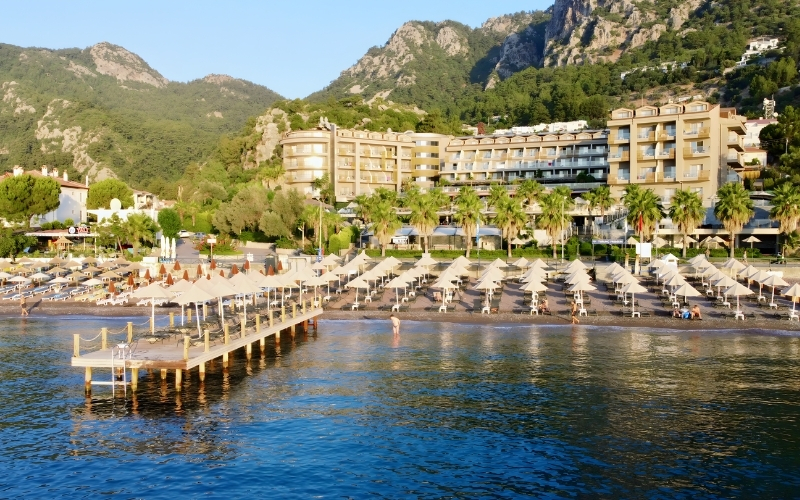
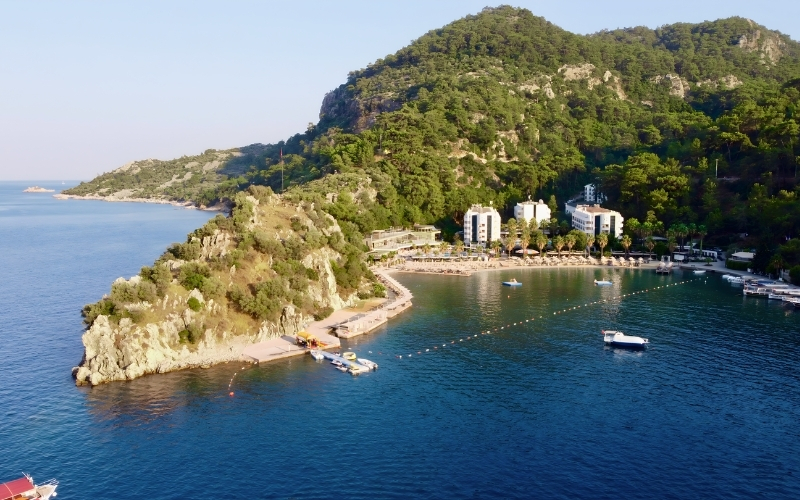
This is probably one of the most unspoilt, most challenging, yet also most impressive sections of the trail. Starting from Marmaris or İçmeler, it stretches all the way to the Datça Peninsula. This section follows a steep, deeply indented coastline and passes through authentic, peaceful villages such as Selimiye, Bozburun, Söğüt and Taşlıca. It is home to important historical stops such as the ancient city of Loryma (Bozukkale). The sea views are uninterrupted and magnificent. Thanks to its proximity to the start of this section and to the routes waiting to be explored, Turunç can be a good place to stay and a good starting point for those who want to walk certain parts of the Bozburun stage.
2. The Datça Peninsula Section
This section crosses from end to end the special peninsula where the Aegean meets the Mediterranean. Its highlight is Knidos, one of the most important centres of the ancient world. The stone streets of Eski Datça (Old Datça), almond orchards, beautiful bays such as Hayıtbükü and Palamutbükü, and windswept headlands are the characteristic features of this stage.
3. The Gulf of Gökova Section (Gulf of Kerme)
This section links the Datça and Bozburun peninsulas and follows the southern shores of the Gulf of Gökova. It lies close to popular start and finish points such as Akyaka. It covers the ancient city of Keramos and perhaps the area around Sedir Island (Cleopatra Beach). It offers coastal villages, woodland and views across the gulf.
4. The Inner Caria Section
Leaving the coast behind, this section extends into the mountainous and forested areas of inland Caria. It can generally be divided into two parts, North and South. It links the ancient cities between Muğla, Milas and Çine (such as Labraunda, Alinda and Alabanda). It mainly offers forest walks, mountain views and lesser-known ancient ruins.
5. The Muğla and Surroundings Section
This section includes trails covering the area around Muğla city centre and important ancient cities such as Stratonikeia and Lagina. It stands out for its proximity to the region's administrative centre and its wealth of history.
Culture as Your Travel Companion: Villages and People
The Carian Trail is not only about nature and history; it is also closely intertwined with a living culture. Along the route you pass through many small villages and settlements. In these villages you can find modest guesthouses or homes offering accommodation, stock up on supplies at small shops run by locals, and take a break in village coffeehouses, where you'll have the chance to chat with the local people. These encounters enrich your hiking experience and give you a chance to understand the true spirit of the region.
Practical Information for Hiking the Carian Trail
If you are planning to walk the Carian Trail, good preparation is essential:
- Best Time to Go: Spring (late March to May) and autumn (mid-September to November), when temperatures are milder, are the ideal times for hiking. The summer months can be dangerous because of the extreme heat.
- Planning: Once you have decided which section or stage to walk, it is essential to get a good Carian Trail guidebook and detailed maps. A GPS device or reliable GPS apps on your smartphone are also very useful.
- Accommodation: The villages along the route usually have simple pensions or guesthouses run by local people.
- Equipment: Sturdy, waterproof hiking boots with good ankle support are the most important piece of kit. Technical clothing suited to the season, a hat, sunglasses, a sufficiently large backpack, trekking poles, a head torch, a first-aid kit and enough water are the other essentials.
- Safety: If possible, try not to walk alone. Let someone know about your route. Check the weather forecast. Don't rely on water sources – always carry enough water with you.
Discovery Step by Step, an Unforgettable Adventure
The Carian Trail is not just a hiking route; it is a deep journey into the heart of Muğla. This epic 850-kilometre route offers hikers the finest views of the Aegean, the mysterious remains of an ancient civilisation and the warmth of a living culture, all in one. Whether you are an experienced long-distance hiker or simply want to share in the experience on a stage of just a few days, the Carian Trail gives you the chance to discover yourself, become one with nature and touch history. Magnificent views reached after tough climbs, a well-earned glass of tea in a village coffeehouse, footsteps on an ancient stone road... These are the memories the Carian Trail offers – memories you won't easily forget.
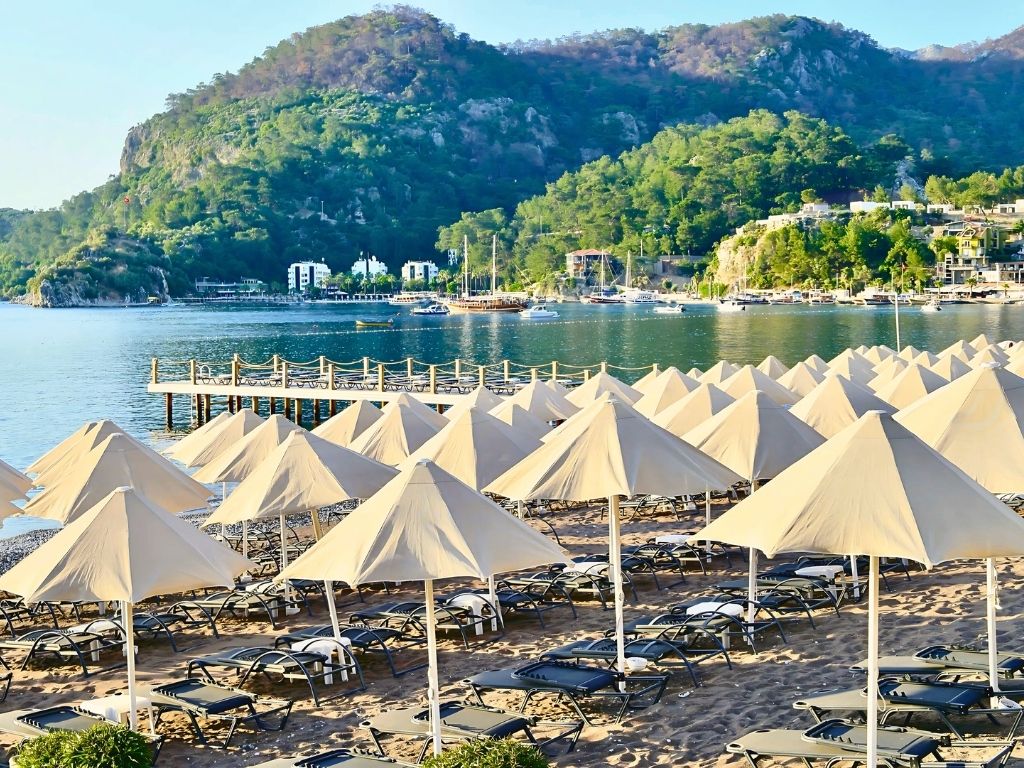
Whether you are exploring the Carian Trail – especially its Bozburun Peninsula stage – or looking for a comfortable base to rest after these adventurous hikes, Turunç is a wonderful choice. Wouldn't you like to crown the unique experiences we've described with comfortable accommodation and first-class service? The Turunç Resort and Turunç Premium hotels, located in the heart of Turunç, promise you an unforgettable holiday. With their magnificent views, modern facilities and an approach centred on guest satisfaction, the Aegean holiday of your dreams is just a click away. Book your stay now to combine your Carian Trail adventures, or all the beauty of Turunç, with an exclusive accommodation experience!