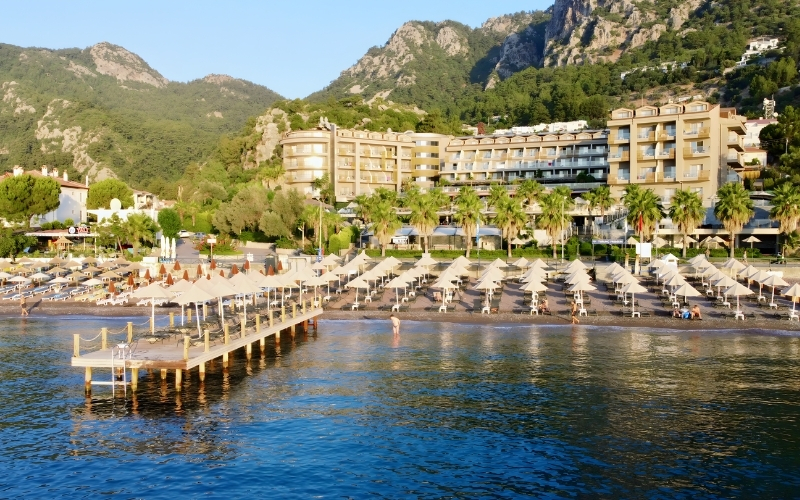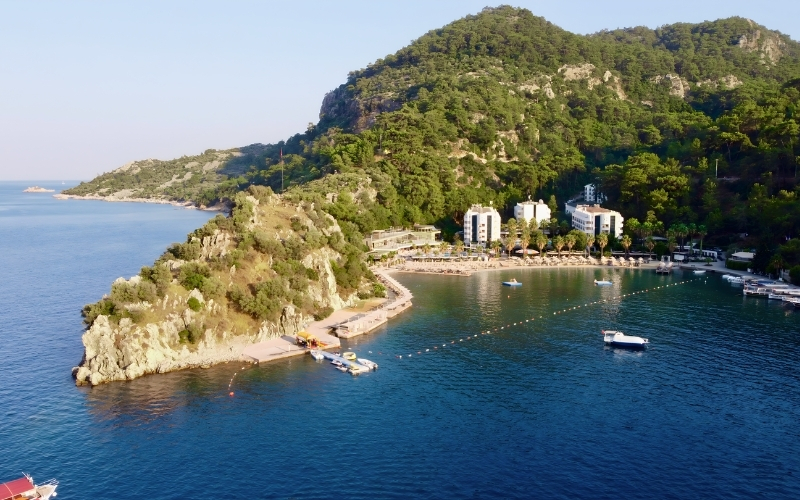
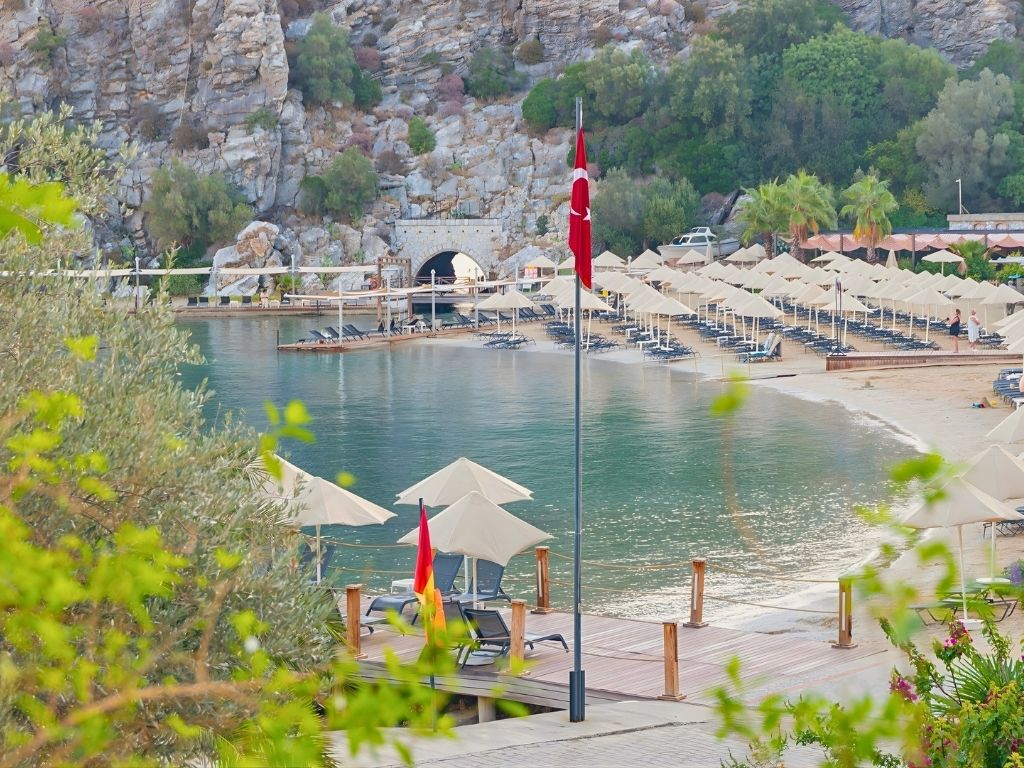
What a wonderful topic! Turunç as we know it today – one of the pearls of the Aegean, with its peaceful and inviting atmosphere – actually has a settlement story whose roots reach back thousands of years, a story that has witnessed different civilisations, quiet periods and, finally, a modern transformation. Behind today's picture of the charming village on the shore of those deep-blue waters lie the echoes of antiquity, the silence of the Middle Ages, the calm of the Ottoman era and the sea-shaped struggle for survival of a fishing village.
Come, let's set off on a fascinating journey into the past of today's popular holiday resort. As we explore the origins of Turunç, let us trace not only the stones and ruins, but also the stories that the sea, the land and the people have passed down from generation to generation. This long and intriguing story, stretching from antiquity to the present day, will help us understand how Turunç acquired its unique character – and may well deepen our admiration for it even further.
1. Echoes of Antiquity: The Bay in the Shadow of Amos
Although Turunç has no ancient city bearing its own name, the Ancient City of Amos, which looks down on it from above and whose history goes back to the 3rd century BC – the Hellenistic period – is the most important ancient heritage of the area. The fate of Turunç Bay is also closely bound up with this ancient settlement.
Rhodes' Hand on the Mainland: Amos
Amos was a small but strategic “demos” (settlement unit) belonging to the “Rhodian Peraea”, the mainland territory of the powerful maritime empire of Rhodes. In this corner of the Caria region, it was built on Asarcık Hill, which overlooks both the Turunç and Kumlubük bays.
Life in Amos
Inscriptions found in the city give us clues about life in Amos. Land lease contracts dated to around 200 BC in particular show that farming (probably olives, grapes or grain) was an important source of livelihood. The well-preserved theatre (with room for about 1,300 people) suggests that the city had a social and cultural life, while its strong walls reveal a need for defence.
The Role of Turunç Bay
So what was Turunç Bay down below like while life went on in Amos up on the hill? Although there is no conclusive evidence, it is highly likely that this natural harbour served Amos as a landing stage, or at least as a spot where boats could put in. Perhaps there was a small fishing settlement or a storage area, but the main centre of settlement was Amos on the hilltop.
2. The Silence of the Middle Ages: Byzantine Traces and Probable Stagnation
With the division of the Roman Empire and the start of the Byzantine period, many small coastal settlements like Amos began to lose their importance. General instability in the region, pirate raids and shifting trade routes may have led to the decline of such small centres.
Gebekse Monastery
The Byzantine-era church/monastery ruins in Gebekse Bay, a little further south of Turunç, are important evidence that Christianity and a Byzantine presence continued in the area. However, this does not mean that Turunç Bay itself was a densely populated settlement. Apart from religious centres such as the one at Gebekse or small military lookout posts, the area is thought to have remained generally sparsely populated.
3. The Ottoman Centuries: Life as a Quiet Coastal Corner
When the Ottoman Empire took control of the region, Marmaris gained importance from time to time as a strategic port, but Turunç Bay once again largely kept to itself.
Low-Density Settlement
Ottoman records make no mention of a large settlement by the name of Turunç. The rugged terrain of the area and its distance from the main trade routes kept it from becoming a major centre. There was probably no dense settlement here beyond a small landing stage, a few fishermen's huts and farmland (such as olive groves) scattered across the surrounding slopes.
4. Lives Shaped by the Sea: The Birth of Turunç as a Fishing Village
The foundations of Turunç's present-day identity were laid in the late 19th and early 20th centuries, when it took shape as a small fishing and sponge-diving village.
Way of Life
In this period, life in Turunç depended entirely on the sea. The men went out in their small boats to fish or to hunt for sponges – a dangerous trade – while the women contributed to the family budget both by running the household and by working in small gardens or olive groves. Life was hard and means were limited. Travel was mostly by sea, and even a trip to Marmaris counted as a major event.
5. A Paradise Discovered: The Footsteps of Tourism and Transformation
What changed the fate of Turunç was tourism, which slowly began to take root in the 1970s and picked up pace especially in the 1980s.
Economic and Social Change
Tourism replaced fishing and farming as the village's main source of income. This both increased economic prosperity and changed the social fabric. Yet despite this change, Turunç largely managed to preserve its core identity, its tranquillity and its warm, friendly atmosphere. Achievements such as the Blue Flag award have also been a sign of this care.
Today: A Modern Village of Peace in the Embrace of History and Nature
Today Turunç is a special place that strikes a fine balance between the historical fabric inherited from antiquity, the natural beauty it has preserved for centuries, the warmth it carries from its fishing-village past and the amenities of modern tourism. It is still a haven far from the hustle and bustle of Marmaris, living at its own calm rhythm and offering its visitors the chance both to unwind and to explore.
A Legacy from the Past, an Identity Carried into the Future
The story of Turunç is a beautiful example of a landscape's journey through time. From the ancient stones of Amos to the silence of Byzantium, from the calm of the Ottoman era to the modest life of the fishing village and finally to the transformation brought by tourism, every period has added something to the identity Turunç has today. Knowing the origins of Turunç helps us understand that it is not just a beautiful bay, but also a living, breathing place with a deep-rooted past.
As you follow in the footsteps of the unique Turunç experience we have described and its deep-rooted past, wouldn't you like to crown your holiday with comfortable accommodation and first-class service? Located in the heart of Turunç, the Turunç Resort and Turunç Premium hotels promise you an unforgettable holiday. With their magnificent views, modern amenities and guest-focused approach, the Aegean holiday of your dreams is just one click away. Book your place now and combine all the beauty of Turunç with an exclusive stay!