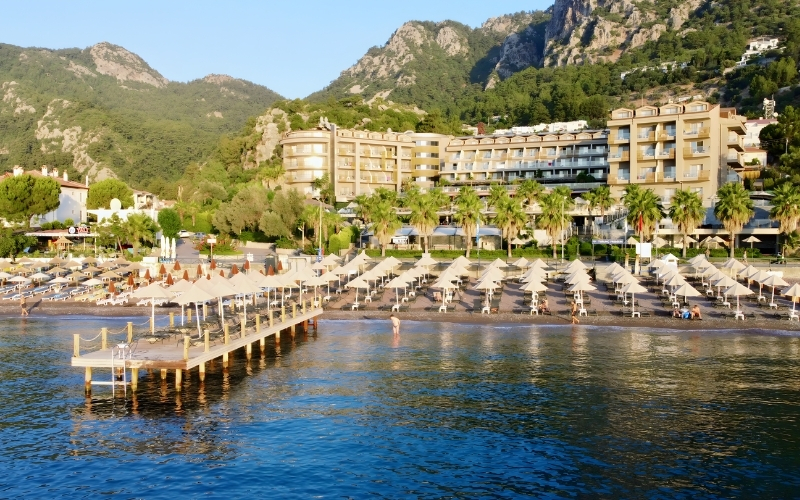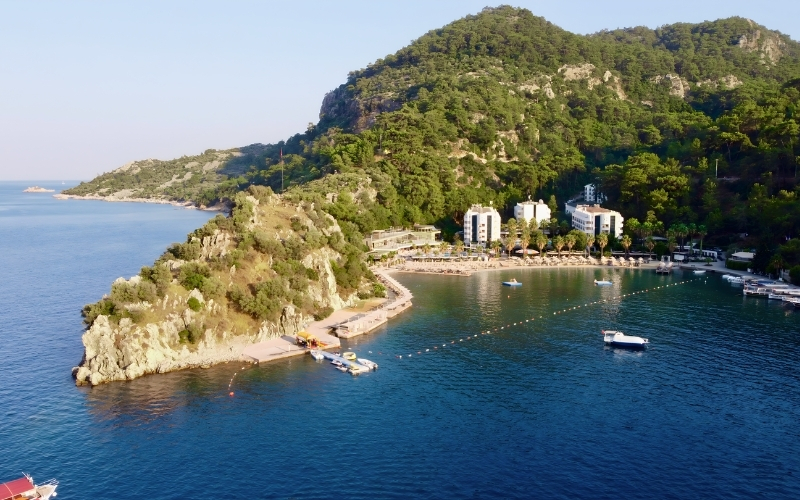
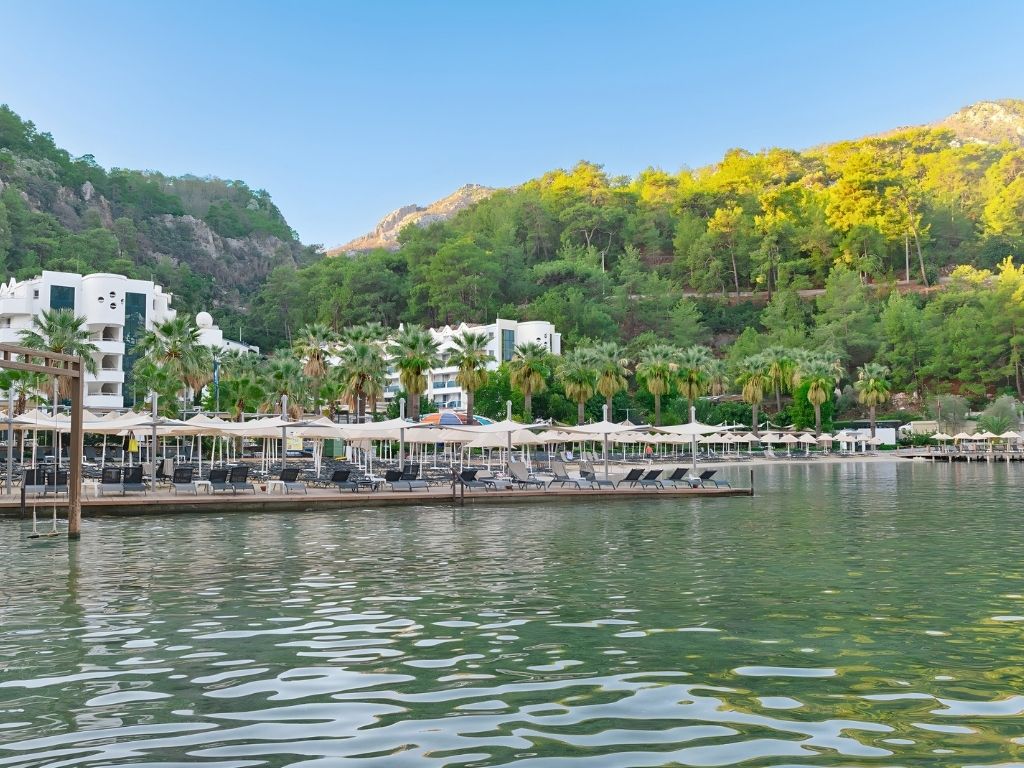
Most guests get to know Turunç through its sea first; yet the pine-covered slopes that embrace the bay promise a completely different holiday just a few steps from the beach. A walk that starts in Turunç can take you up to the theatre steps of an ancient city or along forest paths with sea views; and if you are ready to venture a little further, the Bozburun Peninsula section of the Carian Trail, Türkiye's longest waymarked hiking route, is also close at hand.
In this article, we have listed the walks in and around Turunç from easy to challenging. For each trail, we describe what you will see, how hard you will have to work and how you can plan your return. Our aim is not to impose a single route, but to help you choose the walk that best suits your fitness, your time and your curiosity.
Before Choosing a Trail: Terrain and Levels
Turunç and its surroundings are quite rugged. Most of the steep slopes around the bay are covered with Turkish red pine forest. The ground varies from trail to trail: you may come across every kind of surface, from the flat walkway of the promenade to gravel forest roads, and from there to rocky, steep paths.
So when assessing a trail, don't look at distance alone. Gradient, terrain and the heat of the day can make even a short walk challenging; whether the path is waymarked and how you will get back should also shape your choice. The levels we use in this guide, with an example for each, are as follows:
- Easy: Short walks on flat or gently sloping ground that require no special equipment. Example: the seafront promenade.
- Moderate: Trails with noticeable climbs that call for basic fitness and sturdy shoes. Example: the path climbing from Turunç up to Amos.
- Challenging: Long routes, or routes with unmarked or rocky sections, that require a map, GPS and experience. Example: the unmarked paths in the forest and the Bozburun stage of the Carian Trail.
An Easy Start: The Turunç Promenade
If you want to warm up your legs on the first day of your holiday or before dinner, the most relaxed option is the promenade that stretches along the seafront. Its gradient is next to nothing, making it perfect for a short stroll. As you walk with the scent of iodine drifting in from the sea, you get to know the rhythm of the village and size up, from afar, the slopes you will be climbing in the days to come.
Once you have finished the promenade, you can turn off into the quiet back streets further inside the village and watch local life go by. For this walk, a hat, water and comfortable shoes are all you need; the real point is to take in the scenery without rushing.
Easy to Moderate: Sea-View Paths Towards Kumlubük
Turunç's first neighbour to the south is Kumlubük. Some low-lying paths running alongside the road to this bay and parallel to the shore offer occasional glimpses of the sea as you walk through the forest. These paths are generally easy or moderate and appeal to those who want to enjoy both forest and sea on the same walk. The asphalt road between Turunç and Kumlubük is approximately 5–6 kilometres long; it is winding and undulating, but its gradients are reasonable. Don't assume that the paths continue uninterrupted all the way to Kumlubük; on stretches where you have to use the road, watch out for traffic and wear clothing in highly visible colours.
If you extend your walk all the way to Kumlubük, you will be greeted by fish restaurants lined up along the shore and a beach made up mostly of pebbles and stones. The bay is a lovely stop for a swim after your walk or for a long, leisurely meal. In the summer months, small shuttle boats may also run between the two bays; in that case, you can make your way back on a short and scenic boat ride. Find out before you set off whether the boats are running that day; if they are not, plan on walking back as well.
The Classic Moderate Route: Climbing from Turunç to Amos
One of the most popular hiking destinations in Turunç is Amos Ancient City, on Asarcık Hill, which juts out into the sea between the bays of Turunç and Kumlubük. From Turunç, the path takes about 45–60 minutes to reach the city; much of the way runs through pine forest. The path is generally easy to follow, and since it heads uphill it requires basic fitness. As you approach the ancient city, the final climb often becomes rocky and steep.
Two rewards await you at the top. The first is history: the city, which enjoyed its heyday in the Hellenistic period, has a theatre with remarkably well-preserved seating steps, remains of its city walls, cisterns and the foundations of the Temple of Apollo Samnaios. The second is the view: the turquoise Turunç Bay on one side, the tranquillity of Kumlubük on the other, and the island of Rhodes on the horizon. The steps of the theatre make a good place to stop, catch your breath and take in the view after the climb.
The measure of a good hike is not how quickly you reach the top, but how much time you give the view once you get there.
There is another option for those who want to shorten the climb: you can follow the Kumlubük road and drive up to the foot of the hill, then cover the rest with a short walk; just keep in mind that parking space is limited. In summer, do this walk early in the morning or in the late afternoon. If you want to watch the sunset from the hilltop, start your descent before dark; the rocky section of the final climb is much harder to tackle in the dark. Even so, carrying a head torch is a sensible precaution.
Challenging Trails: Forest Roads and the Bozburun Stage of the Carian Trail
The gravel and dirt forest roads leading into the mountains behind Turunç are less steep than the paths, which makes them suitable for long, brisk walks; however, most of these roads, firebreaks and forest paths are not waymarked. Don't venture deep into the forest without a map or GPS, and leave the narrow, unmarked paths branching off the main roads to experienced hikers only.
If you are interested in long-distance hiking, you can use Turunç as a base for the Bozburun Peninsula section of the Carian Trail. Considered one of the most challenging parts of the route, this stage follows the peninsula's rugged, deeply indented coastline and passes through villages such as Selimiye and Bozburun. Even walking just a short stretch by following the red-and-white waymarks is enough to get a feel for the rocky, mountainous character of the peninsula. You can find the details of the route in our Carian Trail guide.
Planning Your Way There and Back
Not every bay that looks close on the map can be reached on foot. Reaching Gebekse Bay overland is practically impossible, while getting to Kadırga Bay by land may require a long and demanding walk. Save these bays for your boat days, and choose your walks from routes where the way back is clear.
Since the promenade and the Amos path start right in the village, you can easily plan to return the same way. If you are walking towards Kumlubük, decide before you set off whether you will leave your return to the shuttle boat or to your own two feet. On the forest roads, set your return time so that you are back at your starting point before dark. Whichever trail you choose, check the weather forecast and let someone know your route and estimated return time; if you are staying at a hotel, you can also share this information with reception. Do not head onto unmarked paths alone.
Preparation by Season and Level
The most comfortable months for hiking are April–May and September–October. In summer, avoid the midday heat; set off either at daybreak or in the cool of the late afternoon. In winter, bear in mind that the paths may be muddy on rainy days. Pack your bag according to the level you have chosen:
- Easy: Comfortable shoes, a hat, sunscreen and water.
- Moderate: Non-slip hiking boots, preferably with ankle support; at least 1.5–2 litres of water per hiker; snacks; a fully charged phone; and a head torch if you will be staying out for the sunset.
- Challenging: In addition to the moderate-level items, a map, a compass or a GPS app; trekking poles; a whistle for emergencies; and enough spare water that you don't have to rely on water sources along the way.
Look after nature with the same care you take of yourself: carry your rubbish back out in your bag, don't pick plants and never light a fire in the pine forest. Turunç's trails reward most generously the hiker who takes their time and leaves no trace behind. Both an evening stroll that begins on the promenade and a sunset watched from Amos hill can become some of the most memorable moments of your holiday.